

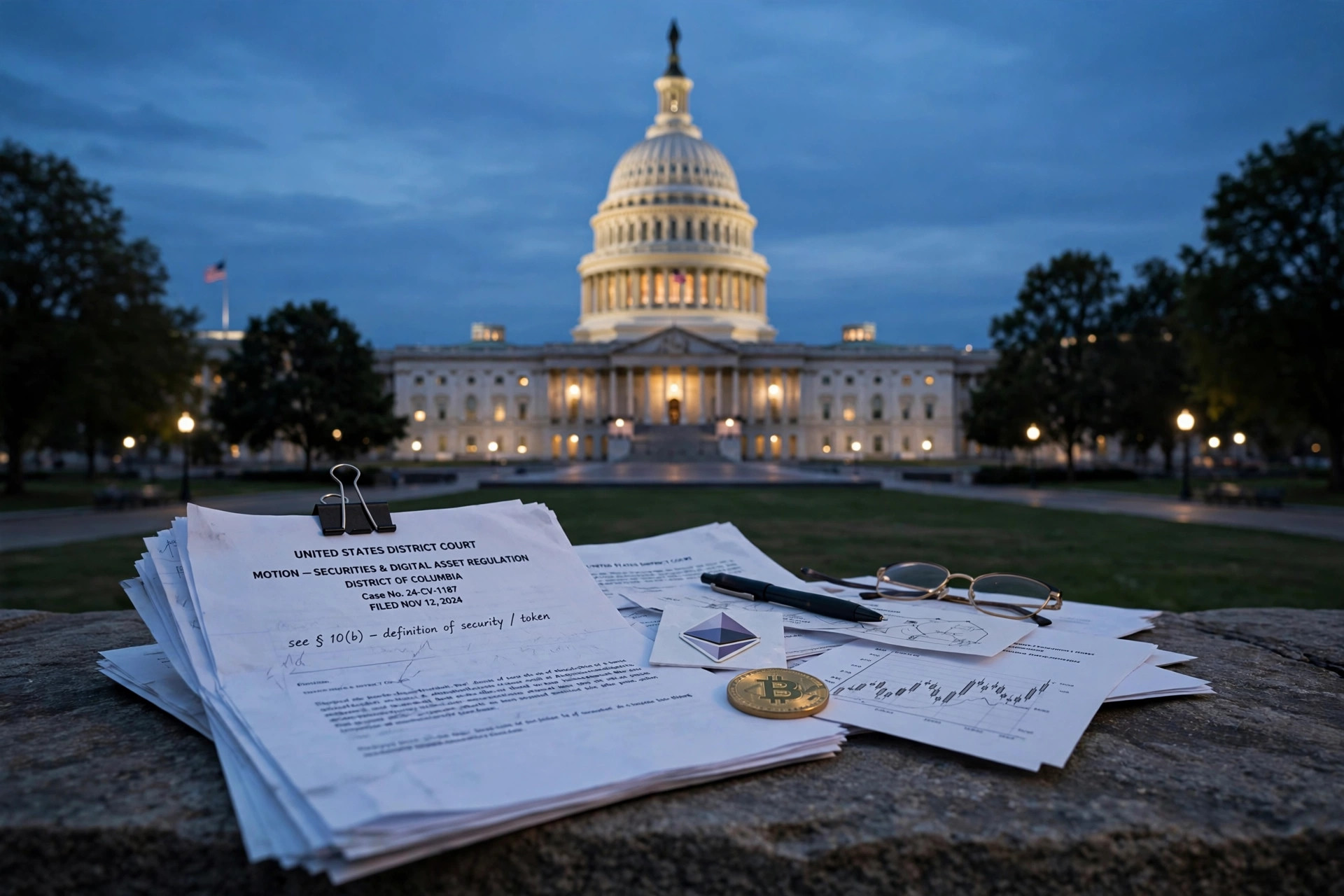
Patrick Witt, the White House official who helped lead the administration’s push for the CLARITY Act, is leaving his post as the landmark crypto market-structure bill stalls in the Senate. His departure removes one of the most visible advocates for a comprehensive federal framework for digital assets at the very moment when negotiations over the legislation have slowed, leaving exchanges, token issuers and investors facing continued legal uncertainty.
The CLARITY Act, formally the Digital Asset Market Clarity Act, is designed to answer a question that has shaped a decade of litigation in the United States: when is a digital asset a security regulated by the Securities and Exchange Commission, and when is it a commodity overseen by the Commodity Futures Trading Commission? The bill passed the House with bipartisan support, but its progress in the Senate has been far slower, with banking and agriculture committees, ethics concerns and disagreements over decentralised finance all complicating the timetable. Readers can follow the legislative record through Congress.gov, the official source for federal legislation.
Why Witt’s Role Mattered
Witt served as a senior adviser on digital assets and acted as a bridge between the White House, Congress and an industry that has spent years arguing it cannot build long-term businesses under rules written for traditional securities markets. In practice, that meant translating technical questions about token networks, staking and market intermediaries into legislative language, and pressing lawmakers to treat clarity itself as a consumer-protection measure.
Supporters of the bill argue that without a statutory division of authority, regulation in the United States will continue to be made through enforcement actions and court decisions. That approach, they say, produces inconsistent outcomes, drives activity offshore and leaves ordinary customers with fewer protections than a clear licensing and disclosure regime would provide. Coverage of legal developments for readers of Daily News Law has repeatedly shown the same pattern in other areas of consumer law: when the governing test is unclear, disputes multiply and compliance costs rise for everyone.
What Is Stalling the Bill in the Senate?
The Senate is not a single audience. The CLARITY Act touches banking, commodities, anti-money-laundering rules and campaign ethics, so it draws scrutiny from several committees rather than one. Senators have raised questions about how the bill would treat decentralised finance platforms, whether senior officials should be restricted from profiting from crypto ventures while in office, and how much authority each regulator should retain over spot markets.
Those are not minor drafting points. The definition of a decentralised network determines which tokens fall outside securities law. The treatment of developers who write code but do not custody customer funds determines whether software publishing could attract liability. Stablecoin rules, already addressed in separate legislation, interact with the market-structure bill as well. Each unresolved issue gives opponents a reason to slow the process and supporters a reason to seek compromise language that may not satisfy either side completely.
The Legal Consequences of Further Delay
For crypto firms, delay does not mean an absence of law. It means the existing patchwork continues: SEC and CFTC enforcement, state money-transmitter licensing, state consumer-protection statutes and private litigation. Companies must register, structure products and answer regulators without knowing whether Congress will soon redraw the boundaries they are building around.
That uncertainty has practical effects. Exchanges may limit which assets they list. Startups may launch first in jurisdictions with clearer licensing paths. Banks considering custody or trading services may wait for a final statute before committing capital. Lawyers advising clients in this space say the cost is not only legal fees, but lost time — products are designed defensively, to survive the strictest plausible interpretation of current law, rather than to serve customers most efficiently.
The contrast with other areas covered by this site is instructive. In consumer cases such as motorcycle lemon law claims in California, outcomes often turn on precise statutory definitions and on which body of rules applies. Crypto regulation is now at the same kind of turning point, only at federal scale and with far larger markets at stake.
What Happens Next?
Witt’s departure does not, by itself, kill the CLARITY Act. Bills of this size have institutional momentum, committee staff continue negotiating text, and industry and investor groups will keep lobbying for a final vote. But losing a central White House advocate weakens coordination, especially if the administration’s attention shifts to other priorities or if Senate leaders conclude that the remaining disagreements cannot be settled in this session.
Three paths are now plausible. The Senate could produce a compromise version that narrows the bill, clarifies regulator jurisdiction and addresses ethics concerns, then send it back to the House. Lawmakers could attach parts of the framework to another legislative vehicle. Or the effort could slip into the next Congress, forcing supporters to rebuild momentum while courts continue deciding the underlying questions case by case.
For now, the legal message for digital-asset businesses is unchanged and unwelcome: plan for the law as it is, not as it may soon be. Document compliance decisions, monitor Senate committee action closely, and expect regulators and judges — not Congress — to remain the main source of answers until a market-structure statute is actually signed into law.
