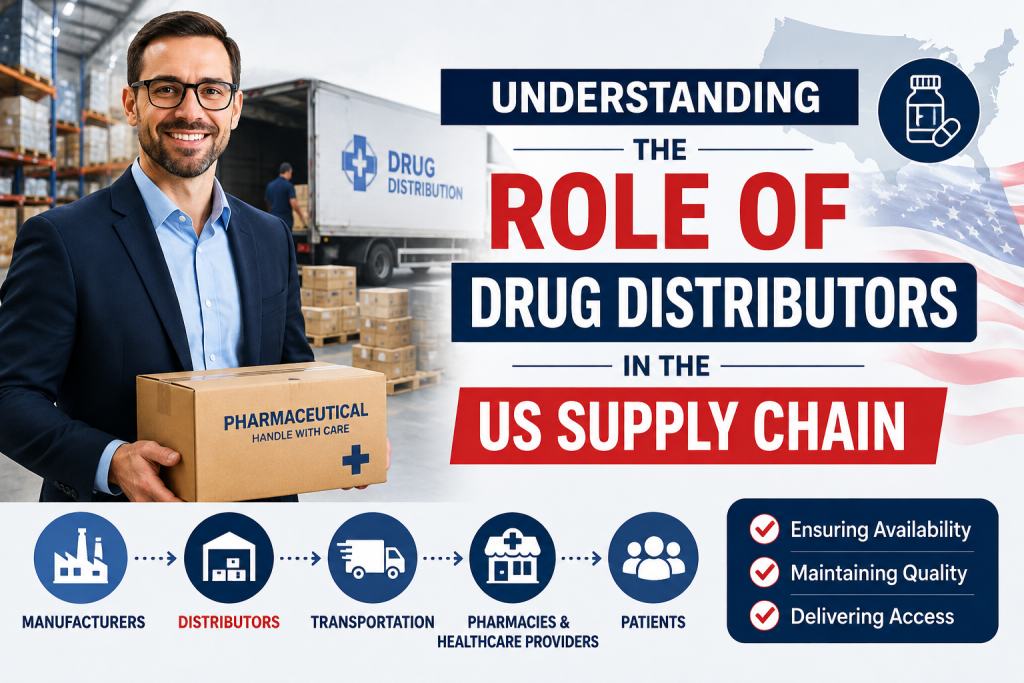
When a pharmacy runs out of a critical medication, the first question asked is always the same: what went wrong at the factory? For healthcare operators, hospital systems, and independent pharmacies relying on drug wholesale distributors to keep their shelves stocked, that instinct is understandable — but dangerously incomplete. Manufacturing failures are real. API sourcing vulnerabilities are real. But between the factory floor and the pharmacy counter sits an entire layer of decisions, systems, and capabilities that either absorb a shortage or accelerate it. That layer is distribution. And in most shortage post-mortems, it goes nearly unexamined. This article makes the case that distribution intelligence — not just domestic manufacturing capacity — is the most immediate, deployable lever the US pharmaceutical supply chain has for reducing shortage impact on patients today.
The Shortage Narrative Has Always Pointed Upstream — Here’s Why That’s Incomplete
The storyline around drug shortages is well-rehearsed: a factory in India fails an FDA inspection, an API supplier in China halts production, a hurricane floods a critical IV solutions plant. These are legitimate, documented causes. The USP 2025 Annual Drug Shortage Report confirms the depth of the crisis — 89% of drug shortages recorded in 2024 were carry-overs from the prior year, with more than 40 lifesaving medications remaining in shortage for over three consecutive years.
But the upstream narrative creates a damaging blind spot. It trains healthcare operators, policymakers, and procurement teams to treat shortages as events that simply arrive — unpredictable, uncontrollable, and fully attributable to forces outside the distribution network. That framing is wrong. By the time a shortage visibly hits a pharmacy’s inventory, a sequence of distributor-level decisions has already been made — about forecasting, sourcing relationships, inventory buffers, and customer communication. Those decisions either compress the damage or compound it. The role of drug distributors in that sequence is not passive, and treating it as such costs patients access to medications they need.
What Distributor-Level Intelligence Actually Looks Like — and What It Costs When It’s Absent
Distribution intelligence refers to four concrete operational capacities: real-time demand forecasting, upstream manufacturing signal monitoring, supplier network redundancy, and proactive downstream communication with pharmacy partners. Distributors either have these systems functioning at scale, or they don’t.
The contrast between archetypes is stark. A reactive distributor runs on historical order data, maintains single-source manufacturer relationships for cost efficiency, and learns about shortages when customers call about unfulfilled orders. An intelligence-driven distributor monitors FDA shortage databases and manufacturer production alerts continuously, holds diversified sourcing relationships for high-risk drug categories, and activates allocation protocols before stockouts reach the customer level.
The cost of the reactive model is concrete: pharmacies receive allocation cuts without warning, clinical staff scramble to find therapeutic substitutions under pressure, and patients face delayed access to critical medications. Even Cardinal Health — one of the largest drug wholesale distributors in the country — has publicly acknowledged that many supply disruptions arrive with little to no advance notice. Scale alone does not guarantee intelligence capacity.
The Allocation Decision Is Where Shortages Are Won or Lost
When supply of a critical drug is constrained, every distributor faces the same question: who gets product first? This allocation decision is one of the most consequential — and least examined — moments in the entire shortage cycle.
The industry default is volume. Highest-spend customers receive priority. It is a financially rational system that systematically disadvantages independent pharmacies, rural health clinics, and long-term care facilities — the providers serving patient populations with the fewest alternatives. The effect on vulnerable patients is structural, measurable, and real.
Intelligence-driven distributors build allocation frameworks that weigh clinical criticality alongside volume — treating oncology drugs, sole-source generics, and shortage-designated products under separate protocols from commodity inventory. That distinction, invisible to most pharmacy buyers, is the operational difference between a distributor that protects patient access and one that simply fulfills orders until it cannot.
The Three Capabilities That Separate Resilient Distributors From Reactive Ones
Pharmacy operators evaluating distribution partners need a concrete framework. Three capabilities mark the difference between a distributor that buffers shortage impact and one that passes it directly downstream.
Upstream Signal Monitoring is the first. Resilient distributors actively track the FDA’s drug shortage database, manufacturer production advisories, and import disruption indicators on a continuous basis — not as a quarterly review. They learn about supply constraints before their customers do. Reactive distributors learn about them when orders go unfulfilled.
Supplier Network Depth is the second. Single-source supplier reliance is the most preventable form of shortage vulnerability in pharmaceutical distribution. Resilient distributors maintain vetted, active relationships with multiple manufacturers and qualified secondary sources for every high-risk drug category in their portfolio. Secondary wholesalers are a documented safety net — their role is not a workaround but a deliberate redundancy strategy.
Proactive Customer Communication is the third. Intelligence is operationally worthless if it stays internal. Distributors must have systematic processes for alerting pharmacy partners to anticipated supply constraints, offering substitution guidance, and providing realistic restock timelines — before stockouts occur, not after.
The question every pharmacy operator should be asking their distribution partner is direct: when did your distributor last contact you about an incoming shortage before it affected your inventory? The answer reveals more about a distributor’s true capabilities than any service brochure.
Why Independent Pharmacies Bear the Highest Shortage Risk
Independent pharmacies occupy the most exposed position in the supply chain during a shortage event. Without the bulk purchasing scale of national chains or the diversified procurement infrastructure of large health systems, they carry no natural buffer when primary supply is disrupted.
That vulnerability is compounded by volume-based allocation. When rationing begins, independent pharmacies — already lower-priority by spend — receive cuts first and deepest. The communities they serve, often rural or underserved urban populations, absorb the patient-level consequences directly.
The strategic implication is clear: choosing a distribution partner is not a transactional cost decision. It is a shortage resilience decision. The right question is not which distributor offers the lowest per-unit price today — it is which distributor has the intelligence infrastructure, sourcing depth, and communication protocols to protect my patients when the next shortage hits.
What the Supply Chain Needs Is Not More Manufacturers — It’s Smarter Distribution
Reshoring pharmaceutical manufacturing is a legitimate long-term priority. Rebuilding domestic API production capacity and reducing geographic concentration risk in India and China are defensible policy goals.
But domestic manufacturing capacity takes years — often a decade or more — to build at meaningful scale. The shortages hitting pharmacies this quarter cannot wait for that infrastructure to materialize.
Distribution intelligence is deployable now, within the existing supply chain, without new legislation or capital-intensive construction. A distributor that monitors upstream signals, diversifies its sourcing relationships, and communicates shortage risk proactively is compressing shortage impact in real time — with existing tools and existing infrastructure.
There is a broader opportunity here as well. Distributor-level demand and inventory data, shared systematically across the industry, could give the FDA and domestic manufacturers earlier and more granular shortage warning signals than currently exist — transforming drug distributors from passive fulfillment operators into active intelligence nodes within a national shortage response infrastructure.
The Distributor You Choose Is Your First Line of Defense Against Shortages
Drug shortage resilience is not built in a factory — it is built into the distribution partner a pharmacy or healthcare provider selects. Drugzone Pharmaceuticals Inc. is a nationally licensed, NABP-accredited generic pharmaceutical distributor, FDA-registered and DSCSA 2025-compliant, serving hospitals, independent pharmacies, long-term care facilities, specialty clinics, and veterinary networks across all 50 states. Backed by partnerships with 75+ manufacturers, a 20,000 sq. ft. distribution facility, and a sales team with 30+ years of combined industry expertise, Drugzone delivers not just product — but the sourcing depth, supply intelligence, and proactive communication that transform a distributor from a vendor into a strategic supply chain partner.
Frequently Asked Questions
- If drug shortages are primarily caused by manufacturing failures, what can a distributor realistically do?
A distributor cannot prevent a factory shutdown — but it can dramatically reduce how much that shutdown affects its customers. Distributors with diversified manufacturer networks, proactive FDA shortage monitoring, and pre-established allocation protocols ensure that when one supply source fails, alternatives are already active. The difference between a pharmacy running out of a critical medication and managing through a disruption often comes down to which distributor they chose before the shortage began.
- How does volume-based allocation specifically disadvantage independent pharmacies during a shortage?
When supply is constrained, most distributors allocate available inventory by purchase volume — highest-spending accounts receive product first. Independent pharmacies, which lack the bulk purchasing power of chain networks or large health systems, fall lower in the priority queue by default. This structural bias means independent pharmacies — and the rural or underserved communities they serve — absorb the patient-level impact of shortages disproportionately and earlier than any other provider segment.
- What specific questions should a pharmacy ask a distributor to assess shortage intelligence capabilities before signing a contract?
Three questions cut through most sales conversations: “Do you proactively notify customers about anticipated shortages before they affect our orders?” “How many manufacturer relationships do you maintain for your highest-risk drug categories, and can you source from secondary suppliers when primary supply fails?” And: “Can you show us your allocation policy in writing, and what factors beyond purchase volume determine priority during a constrained supply event?” A distributor that cannot answer all three with specificity is a reactive distributor — regardless of how its marketing materials position it.