

Business Automation Benefits of a Managed AI Agent Platform
Introduction
Business automation is changing how companies manage daily tasks, support customers, and improve productivity. Many organizations now use artificial intelligence (AI) to reduce repetitive work, improve decision-making, and create smoother workflows. However, building and maintaining AI systems can be difficult when businesses need to connect different tools, manage data, and select suitable AI models. This is where a managed AI agent platform can make a real difference. It gives developers and businesses a more organized way to run AI agents without having to build every part of the system from scratch.
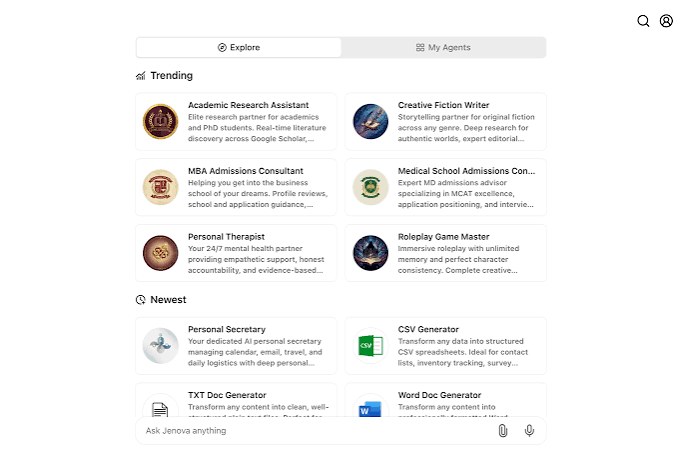
Jenova provides an approach to AI agent development through its Agent API, which introduces a managed service for running custom and prebuilt agents in applications and business workflows. Its described capabilities include model selection, tool connections, knowledge retrieval, memory management, and deployment. These features can help developers create AI-powered experiences that fit specific business needs. By using Jenova as part of an automation strategy, organizations can explore ways to simplify complex processes, improve access to information, and build more useful AI applications.
Understanding a Managed AI Agent Platform
A managed AI agent platform helps developers create, run, and maintain AI agents through a more structured service. Unlike a basic chatbot that mainly responds to individual questions, an AI agent can be designed to work through a series of tasks, use connected tools, and retrieve relevant information before producing an answer. Depending on its configuration and permissions, an agent may help organize information, support customer service, process requests, or assist employees with routine work. A managed environment can reduce the effort required to coordinate these functions, making AI automation easier to plan and maintain.
Jenova's Agent API introduces developers to a service for running custom and prebuilt agents within products and workflows. This approach can be useful for businesses that want to add AI features to existing software instead of creating an entire infrastructure independently. Developers can explore how agents fit into their applications while considering model choices, available tools, and knowledge sources. A managed AI agent platform does not remove every technical challenge, but it can provide a clearer foundation for developing, integrating, and operating AI-powered solutions. This allows teams to focus more attention on business goals and the quality of the user experience.
Improving Productivity Through Business Automation
One of the main benefits of business automation is the ability to reduce time spent on repetitive tasks. Employees often handle similar questions, search through documents, summarize information, and move data between different systems. These activities may be necessary, but they can take attention away from work that requires creativity, communication, or careful judgment. AI agents can assist with suitable routine tasks, helping teams complete work more consistently and respond to requests more efficiently. Human review remains important when tasks involve sensitive information, important decisions, or complex exceptions.
With Jenova, developers can explore how managed agents may support automated workflows inside their products and services. For example, a company could develop an agent that retrieves information from approved knowledge sources and prepares a response for an employee to review. Another application might help users find internal documentation or organize information gathered from connected tools. These examples depend on the agent's configuration, integrations, and permissions, rather than being guaranteed features of every implementation. When automation is designed around clear business needs, organizations can reduce unnecessary manual steps and give employees more time to focus on meaningful work.
Connecting AI Models, Tools, and Business Systems
Effective AI automation often requires more than choosing a language model. Businesses may need to connect their AI applications to approved software tools, information sources, and internal systems. These connections allow an agent to access relevant context and support tasks that involve multiple steps. However, managing separate integrations can create technical challenges, especially when developers need to maintain compatibility, control access, and ensure that information moves correctly between systems. A structured platform can help developers approach these requirements in a more organized way.
Jenova's Agent API description highlights model selection and tool connections as important parts of its managed service. Model selection gives developers a way to consider which AI model is appropriate for a particular application, based on factors such as response quality, cost, speed, and task complexity. Tool connections can help an agent work with external capabilities when the necessary integrations are available and configured. These elements are valuable because different workflows have different requirements. A customer support assistant may need reliable knowledge retrieval, while an internal research assistant may need access to approved documents and selected tools. Choosing the right combination helps businesses create more focused AI solutions.
Using Knowledge Retrieval and Memory Management
AI agents become more useful when they can work with relevant information instead of relying only on general model knowledge. Knowledge retrieval allows an application to find information from selected sources and use it as context for a response. For businesses, these sources may include product documentation, company policies, support guides, technical resources, or other approved content. Better access to relevant information can help agents provide answers that fit a company's processes. However, the quality of those answers depends on the accuracy, freshness, and relevance of the available information.
Jenova's described capabilities include knowledge retrieval and memory management, two areas that can support more useful AI experiences. Knowledge retrieval helps developers consider how an agent can locate information needed for a task, while memory management concerns how relevant context may be maintained and used across interactions, depending on the implementation. These capabilities should be designed with clear rules about what information an agent can access and retain. Businesses should also consider privacy requirements, data protection, and the risks of using outdated or incorrect content. With appropriate controls and regular testing, knowledge-aware agents can help employees find information faster and create more consistent digital experiences.
Simplifying AI Deployment, Security, and Scalability
Moving an AI application from an early prototype into regular business use requires careful planning. Developers need to consider reliability, performance, monitoring, access permissions, and ongoing maintenance. A solution that works well in a small test may behave differently when many users rely on it or when the connected data changes. A managed AI agent platform can provide a more structured starting point for deployment, although the exact operational features depend on the service. Businesses should evaluate how the platform handles their expected workload, technical requirements, and service expectations before making important implementation decisions.
Jenova's Agent API offers an entry point for developers exploring agent deployment and integration options. Before using an AI agent in a live business environment, teams should define its purpose, establish clear permissions, test its responses, and decide when human approval is required. They should also review data handling practices, integration requirements, and potential operating costs. Scalability is not simply about supporting more users; it also involves maintaining quality as workflows become more complex. A thoughtful deployment plan helps organizations introduce AI gradually, measure results, and improve their systems as real business needs become clearer.
Building a Practical AI Automation Strategy With Jenova
Successful AI automation starts with a specific problem rather than the technology alone. Businesses should identify tasks that consume time, create delays, or require employees to search across several information sources. They can then determine whether an AI agent is suitable for the task and define what a successful outcome would look like. Useful measures may include response time, task completion rates, employee workload, customer satisfaction, and the number of requests requiring human intervention. Starting with a focused use case makes it easier to test an AI solution before expanding it across the organization.
Jenova can be explored by developers who want to understand how managed AI agents may fit into their products, applications, and business processes. Its Agent API overview points to key building blocks, including model selection, tool connections, knowledge retrieval, memory management, and deployment. These areas provide a useful framework for evaluating an AI integration project and identifying the technical decisions that need attention. Businesses should also review the available documentation to confirm supported features, setup requirements, pricing, and integration details. By combining a clear strategy with careful testing and responsible data practices, organizations can build AI-powered workflows that address real operational needs.
Conclusion
A managed AI agent platform can help businesses explore automation without having to develop every part of an AI system independently. From reducing repetitive work to connecting tools and retrieving useful information, AI agents offer several ways to improve everyday business processes. Their value depends on selecting suitable tasks, providing reliable information, setting appropriate permissions, and keeping people involved where judgment is necessary.
Jenova introduces developers to managed AI agent capabilities through its Agent API, including model selection, tool connections, knowledge retrieval, memory management, and deployment. These building blocks can support the development of AI-powered products and workflows when configured for the right use cases. For businesses considering AI automation, the next step is to review the available documentation, identify a practical application, and test whether an agent delivers measurable value. With a clear plan and responsible implementation, AI can become a useful part of a company's long-term digital strategy.
