

ESG Sounds Good. Execution Is the Problem.
Most companies talk about ESG. Fewer can show results.
Sustainability often lives in slide decks. It gets mentioned in reports. It rarely connects to daily operations.
That gap creates skepticism.
A PwC survey found that over 75% of investors say ESG is important, but many also say reporting lacks clarity and measurable impact.
The issue is not intent. The issue is execution.
ESG Only Works When It’s Measured
If you can’t measure it, you can’t manage it.
That applies to revenue. It applies to cost. It applies to sustainability.
David Rocker once reviewed a project labeled as “ESG-focused.” The presentation highlighted green materials and community benefits.
“We asked one question,” he said. “What’s the actual impact on operating cost and tenant stability? No one had a number.”
That’s where ESG often breaks down.
It needs numbers.
Start With Clear Metrics
Environmental Metrics
Focus on measurable outputs:
- Energy usage per unit
- Water consumption
- Maintenance cost tied to materials
These metrics connect sustainability to operating performance.
Social Metrics
Track real impact:
- Rent-to-income ratios
- Tenant retention rates
- Access to jobs or transit
These numbers show whether a project supports people.
Governance Metrics
Measure consistency:
- Reporting cadence
- Decision accountability
- Risk management processes
Governance is about repeatability.
Tie ESG to Financial Outcomes
ESG should not sit outside the business model.
It should improve it.
Lower energy use reduces operating cost.
Durable materials reduce repairs.
Stable tenants reduce turnover.
Turnover is expensive. Leasing, cleaning, and vacancy gaps add up.
Urban Institute research shows that stable rental communities can reduce turnover-related costs by 15–20%.
That is real value.
Build ESG Into the Design Phase
ESG works best when planned early.
Trying to add it later increases cost.
Design for Efficiency
Choose materials that last.
Reduce long-term maintenance.
Focus on lifecycle cost, not just upfront cost.
Plan for Tenant Stability
Location matters.
Access to jobs matters.
Transportation matters.
If tenants can stay longer, the model improves.
Simplify Operations
Complex systems create friction.
Keep processes clear and repeatable.
Avoid ESG as a Marketing Layer
Many projects treat ESG as branding.
They highlight features without tracking outcomes.
That approach fails over time.
“We saw a project that advertised sustainability but had rising operating costs,” Rocker said. “The materials looked good. They didn’t perform. That gap showed up in the numbers fast.”
Performance matters more than perception.
Build Feedback Loops
ESG is not static.
Measure. Review. Adjust.
Set a cadence:
- Monthly for key metrics
- Quarterly for broader review
Ask:
- What improved?
- What didn’t work?
- What needs to change?
Feedback keeps ESG practical.
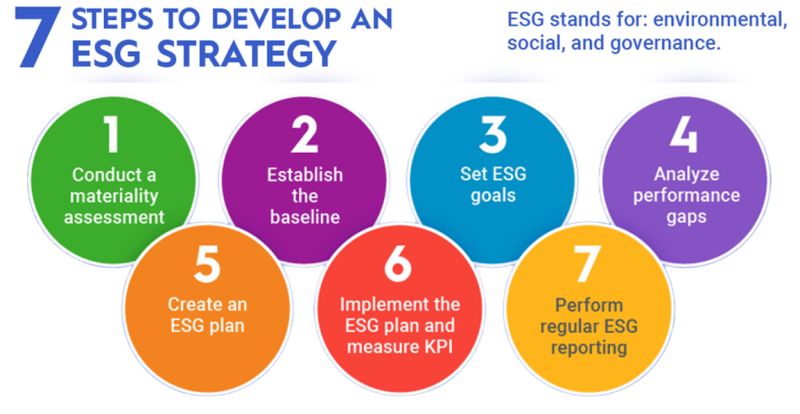
Actionable Steps to Implement ESG
Step 1: Define Three Core Metrics
Pick one environmental, one social, and one governance metric.
Keep it simple.
Step 2: Set Baselines
Know where you start.
Measure current performance.
Step 3: Set Targets
Define realistic improvements.
Tie them to business outcomes.
Step 4: Assign Ownership
Each metric needs a responsible person.
No shared ownership.
Step 5: Track Consistently
Use simple tracking tools.
Consistency matters more than complexity.
Step 6: Report Results
Share progress internally.
Make adjustments based on data.
ESG in Real Estate: A Practical Example
In workforce housing, ESG becomes tangible.
Lower rent-to-income ratios support tenants.
Durable construction reduces maintenance.
Location near jobs reduces commute stress.
These factors improve both impact and performance.
Stable tenants stay longer.
Longer stays reduce vacancy.
Lower vacancy improves cash flow.
That is ESG tied to results.
Common Mistakes to Avoid
Too Many Metrics
Tracking everything creates noise.
Focus on what drives outcomes.
No Link to Financials
If ESG metrics don’t affect cost or revenue, they lose relevance.
Tie them to performance.
Irregular Tracking
Inconsistent measurement leads to weak insights.
Set a fixed schedule.
Overcomplication
Complex systems reduce adoption.
Keep it simple.
Why Practical ESG Wins
Investors want clarity.
Operators want efficiency.
Communities want stability.
Practical ESG aligns all three.
Boston Consulting Group reports that companies integrating sustainability into core operations can see margin improvements and risk reduction over time.
The benefit is not immediate hype.
It is long-term performance.
Final Takeaway
ESG is not a label.
It is a system.
Define clear metrics. Track them. Tie them to results.
Focus on performance, not presentation.
Start small. Improve steadily.
Because sustainability only works when it shows up in the numbers.
