

When you first pull a new pressure washer out of the box, it feels like holding a superpower. You see years of grime on the driveway or green algae on the siding and imagine it all disappearing in a single, satisfying blast. But as any seasoned homeowner will tell you, that power is a double-edged sword. Without the right nozzle, you’re just as likely to strip the paint off your car or etch a permanent “hello” into your cedar deck as you are to clean it.
Understanding how to manage water pressure is the secret to professional-grade results. It’s not just about the PSI (pounds per square inch) of the machine; it’s about how that force is concentrated. By following a few fundamental pressure washer tips, you can ensure your outdoor cleaning projects are both efficient and safe for your surfaces. Choosing the correct nozzle tip is the single most important decision you’ll make before pulling the trigger.
Why Nozzle Choice Matters More Than PSI
Many people focus solely on the power of the motor. They want the highest PSI they can afford. However, the nozzle is the component that actually dictates the “shape” of the water. Think of it like a garden hose: if you put your thumb over the opening, the water comes out faster and harder.
In a pressure washer, the orifice size and the angle of the spray determine the impact. A narrow angle concentrates all the machine’s energy into a tiny point, while a wide angle spreads that energy out. Using the wrong one can lead to “wand marks” on concrete or, worse, irreversible damage to soft wood and automotive clear coats.
Decoding the Color-Coded Nozzle System
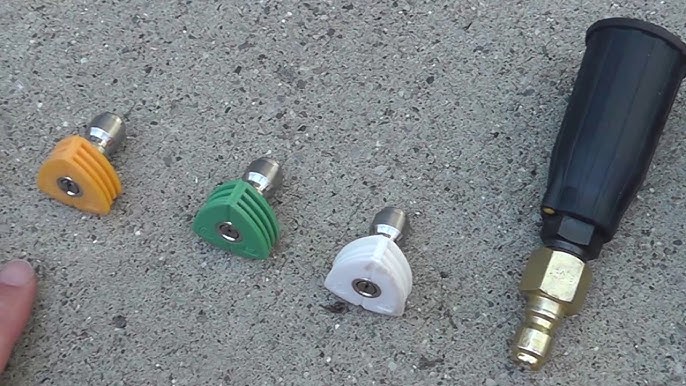
The industry has thankfully standardized nozzle tips by color. This makes it easier for users to identify which tip is best for a specific task. While most machines come with a standard set of four or five, knowing when to switch between them is what separates a novice from a pro.
The Red Tip (0-Degree Nozzle)
The red nozzle is the most aggressive. It delivers a pin-point stream of water that hits with the full force of the pump.
In fifteen years of handling these machines, I rarely recommend the red tip for residential use. It is designed for removing stubborn “baked-on” mud from heavy equipment or cleaning rust off metal. If you use this on a wooden deck, it will slice through the fibers like a saw. Use it with extreme caution and never on any surface you care about aesthetically.
The Yellow Tip (15-Degree Nozzle)
The yellow tip is the “heavy-duty” worker. It provides a small fan of water that is excellent for stripping paint, removing heavy mildew from concrete, or cleaning grease off a garage floor.
It covers more surface area than the red tip but still packs a significant punch. It’s the go-to for “restoration” style cleaning where you are trying to remove a layer of something rather than just washing away dirt.
The Green Tip (25-Degree Nozzle)
The green nozzle is arguably the most versatile tool in your kit. It creates a wider fan that is perfect for general cleaning.
This is the tip you’ll use for washing away leaves from the driveway, cleaning the dirt off your brick patio, or rinsing down your house siding. It offers a great balance between “scrubbing” power and safety, allowing you to move quickly across large surfaces without the risk of etching.
The White Tip (40-Degree Nozzle)
The white nozzle is the “gentle” choice. It produces a broad, soft spray that is ideal for fragile surfaces.
If you are washing your car, cleaning windows, or rinsing down delicate patio furniture, this is your best bet. It provides enough flow to move soap and light dust without the pressure required to damage paint or seals.
The Black Tip (Soap Nozzle)
The black tip is unique because it has a much larger orifice. This causes a drop in pressure, which triggers the chemical injector in your pressure washer to draw soap from the detergent tank. You cannot apply soap with the high-pressure tips; you must use the black tip to coat the surface first.
How to Match the Nozzle to the Material
Selecting a nozzle isn’t just about how dirty the object is; it’s about the material’s “hardness” or “integrity.”
| Surface Material | Recommended Nozzle | Pro Strategy |
| Concrete Driveway | 15° or 25° | Start with 25°; move to 15° for oil stains. |
| Wood Decks/Fences | 40° or 25° | Always move with the grain to avoid splintering. |
| Vinyl Siding | 25° or 40° | Spray from the top down to avoid water getting behind panels. |
| Vehicles/Boats | 40° | Keep the nozzle at least 12 inches from the surface. |
| Brick and Mortar | 25° | Be careful with old mortar; high pressure can blow it out. |
Essential Pressure Washer Tips for Beginners
If you are new to the world of power washing, the following best practices will save you time and prevent costly repairs:
- The “Start-Far” Rule: Always start with the wand about 2 or 3 feet away from the surface. Slowly move closer until you reach the desired cleaning power. It is much easier to move closer than it is to fix a hole you just blasted in your siding.
- Keep the Wand Moving: Never let the spray sit in one spot. Constant, sweeping motions ensure even cleaning and prevent “zebra stripes” or etching.
- Check Your Connections: Before turning the water on, ensure all nozzles are fully clicked into the quick-connect coupler. A loose nozzle can become a high-velocity projectile the moment you pull the trigger.
- Work in Sections: Especially when using soap, work in manageable 5×5 foot areas. You don’t want the detergent to dry on the surface before you have a chance to rinse it off.
Common Mistakes to Avoid
Even experienced DIYers make mistakes that can ruin a weekend project.
One of the biggest errors is using a pressure washer while standing on a ladder. The “recoil” or “kickback” from the wand can easily knock you off balance. For high-reach areas, use an extension wand rather than a ladder.
Another common mistake is ignoring the “bypass” mode. If your engine is running but you aren’t pulling the trigger, the water inside the pump is recirculating and heating up. If left too long (usually more than 3–5 minutes), the heat can damage the pump seals. If you need to move furniture or take a break, shut the machine off.
Maintaining Your Nozzle Tips
Nozzles are wear items. Over time, the high-pressure water erodes the metal or plastic inside the tip, which can change the spray pattern and reduce effectiveness.
- Inspect for Clogs: If your spray pattern looks distorted or “split,” there is likely a tiny grain of sand or mineral buildup in the tip. Use a small needle or a nozzle cleaning tool to clear the obstruction.
- Lubricate O-Rings: A tiny bit of silicone grease on the O-rings of your quick-connect tips will make them much easier to swap out and prevent leaks.
- Store in a Dry Place: Prevent corrosion by drying your tips after use.
Frequently Asked Questions (FAQ)
Can I use a pressure washer to clean my roof?
It is generally discouraged. High pressure can strip the granules off asphalt shingles, significantly shortening the lifespan of your roof. For roofs, “soft washing” with specialized chemicals and low pressure is the professional standard.
What is a Turbo Nozzle?
A Turbo (or Rotary) nozzle combines the power of a 0-degree red tip with the coverage of a 25-degree green tip. It spins a concentrated stream in a rapid circular motion. It’s excellent for concrete but should never be used on wood or vehicles.
Will a pressure washer damage my car’s paint?
If you use the wrong tip or get too close, yes. Always use the 40-degree (white) tip and maintain a distance of at least 12 inches. Avoid spraying directly into engine components or loose trim.
Why is my pressure washer surging?
Surging is often caused by a restricted water flow. Check your garden hose for kinks, ensure your faucet is turned on all the way, and check the inlet filter on the pressure washer for debris.
Final Thoughts
Mastering the art of pressure washing comes down to respecting the equipment and choosing the right tool for the task. By matching the nozzle color to the surface and following basic safety protocols, you can transform your home’s exterior without the risk of damage. Remember: when in doubt, go with a wider angle and more distance. Happy cleaning!