

Building a business takes time, creativity, and resources. Whether you are developing a brand, creating original content, or inventing a new product, protecting what you have built is one of the most important steps you can take. Intellectual property law exists to safeguard those efforts, but many business owners are unsure which type of protection applies to their situation. Working with a qualified Business and Intellectual Property Law Group can help clarify which protections are right for you, but understanding the basics on your own is a strong starting point.
Trademarks, copyrights, and patents are the three primary forms of intellectual property protection available in the United States. Each one covers a different type of asset and carries its own rules for how it is obtained, how long it lasts, and what it actually protects. Knowing the difference could save your business from costly mistakes down the road.
What Is a Trademark?
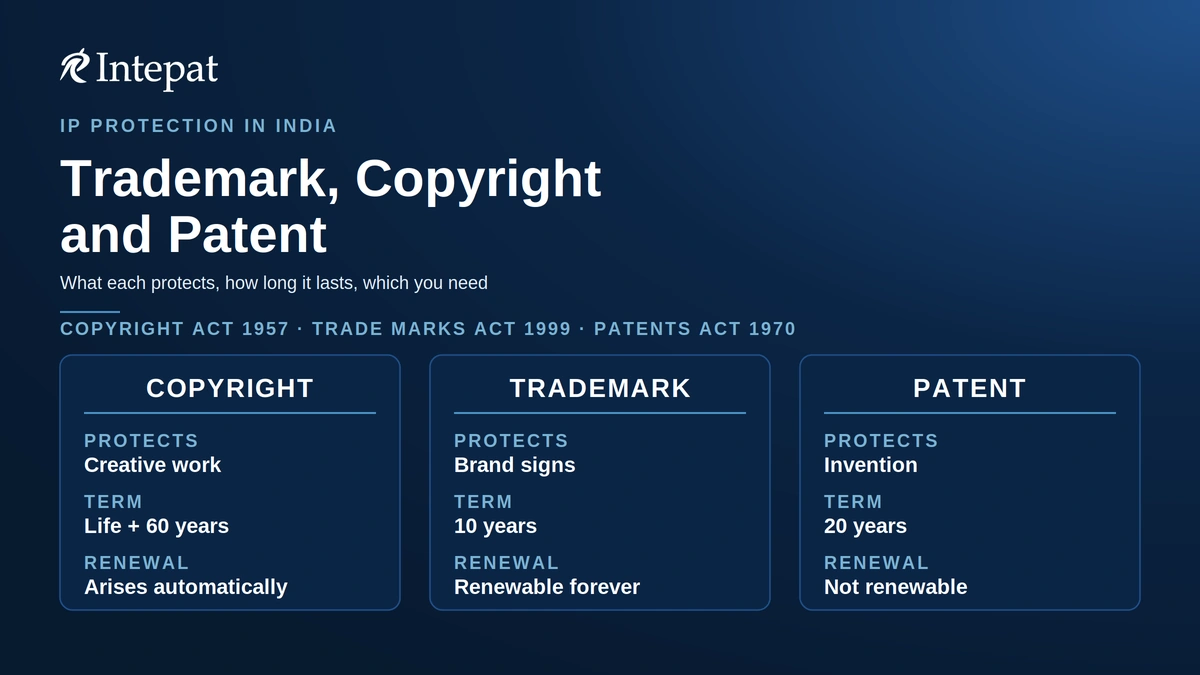
A trademark protects brand identifiers. This includes your business name, logo, slogan, or any other mark that distinguishes your goods or services from those of other businesses. When customers see your logo or hear your tagline, a trademark ensures that no one else in your industry can legally use something confusingly similar.
Trademark rights in the United States can be established simply through use in commerce, but registering your trademark with the United States Patent and Trademark Office (USPTO) provides significantly stronger legal protection. Registration gives you the exclusive right to use that mark nationwide, the ability to sue for infringement in federal court, and the right to use the registered trademark symbol.
Trademarks can last indefinitely as long as they are actively used in commerce and properly renewed. This makes trademark registration one of the most valuable long-term investments a business can make in its brand identity.
What Is a Copyright?
Copyright protects original creative works. This includes written content, music, artwork, photography, software code, videos, and other forms of expression. Copyright does not protect ideas themselves, only the specific expression of those ideas in a fixed, tangible form.
One of the most important things to understand about copyright is that it arises automatically the moment a qualifying work is created and fixed in a tangible medium. You do not need to register it for the protection to exist. However, registering your copyright with the U.S. Copyright Office strengthens your legal position significantly. Registration is required before you can file a lawsuit for infringement, and it may entitle you to statutory damages and attorney fees that you would not otherwise be able to recover.
For most works created on or after January 1, 1978, copyright protection lasts for the lifetime of the author plus 70 years. For works made for hire, the term is 95 years from publication or 120 years from creation, whichever is shorter.
What Is a Patent?
A patent protects inventions. If you have created a new process, machine, design, or composition of matter that is novel, non-obvious, and useful, a patent gives you the exclusive right to make, use, and sell that invention for a limited period of time.
There are three main types of patents in the United States. Utility patents cover new and useful processes, machines, and inventions, and they last 20 years from the filing date. Design patents protect the ornamental appearance of a functional item and last 15 years. Plant patents cover new varieties of asexually reproduced plants and also last 20 years.
Obtaining a patent is a more complex and expensive process than registering a trademark or copyright. It requires a detailed application reviewed by the USPTO, and the process can take several years. Because of this, it is critical to act quickly. In many cases, publicly disclosing your invention before filing a patent application can affect your ability to secure protection.
Which Protection Does Your Business Need?
The answer depends entirely on what you are trying to protect. Many businesses need more than one type of protection, and the categories can overlap. For example, a software company might seek copyright protection for its code, a trademark for its brand name and logo, and a patent for a unique underlying technology.
If you are protecting your brand identity, a trademark is the appropriate tool. If you are protecting original creative content that you have produced, copyright applies. If you have invented something new that functions in a unique way, a patent is what you need.
One of the most common mistakes business owners make is assuming that forming an LLC or registering a business name automatically protects their brand. It does not. A business name registered with the state gives you the right to operate under that name, but it does not prevent others in different states or industries from using the same or similar name. Only a federal trademark registration offers that level of protection.
The Cost of Waiting
Many entrepreneurs delay seeking intellectual property protection because they believe it can wait until the business is more established. This is a costly misconception. Trademark rights, for example, are largely determined by who used the mark first in commerce. If a competitor begins using a similar name before you have established your rights, you could find yourself in an expensive dispute or forced to rebrand entirely.
The entertainment and creative industries are particularly vulnerable in this area. Artists, musicians, content creators, and media professionals often underestimate how much their intellectual property is worth until someone else profits from it. The Elaine Law Group has written extensively about why legal protection is not just a formality for creative professionals but a business necessity.
Taking the Next Step
Understanding the distinction between trademarks, copyrights, and patents is the first step toward protecting your business effectively. The next step is assessing which protections your specific assets require and taking action before a gap in coverage becomes a serious problem.
Whether you are launching a new brand, releasing creative work, or bringing an invention to market, intellectual property law is one of the most practical areas of business law for entrepreneurs to understand. The right protections in place from the beginning can make the difference between building lasting value and losing it to someone who moves faster.
