

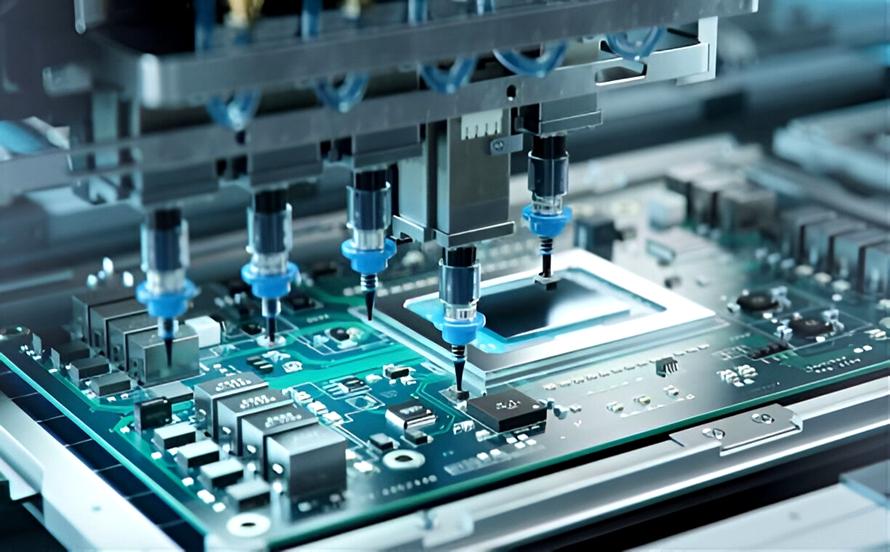
Developing an electronic product involves much more than designing a printed circuit board. Components need to be sourced, circuit boards need to be assembled, soldering processes must be controlled, and finished products need to be inspected and tested. Managing each of these activities separately can increase coordination requirements, production time, and supply chain complexity. Turnkey PCB assembly provides an integrated approach by allowing a manufacturer to manage most or all stages of PCB production under one service.
From component procurement and PCB fabrication to assembly, inspection, testing, and delivery, turnkey electronics manufacturing can simplify the production process. This approach is used by startups, product developers, OEMs, and established electronics manufacturers that need a coordinated solution for their PCB requirements.
What Is Turnkey PCB Assembly?
Turnkey PCB assembly is a manufacturing model in which the assembly provider manages the major production activities required to deliver a completed PCB assembly. Depending on the agreement, this can include component sourcing, bare PCB manufacturing, component placement, soldering, inspection, testing, and final packaging.
The term “turnkey” indicates that the customer can provide the necessary design information and receive a finished assembled product without having to coordinate every manufacturing stage independently.
This approach differs from consignment assembly, where the customer supplies some or all of the components. In a turnkey model, the manufacturer typically takes responsibility for sourcing the required components as well as managing the assembly process.
How Does Turnkey PCB Assembly Work?
The process generally begins when the manufacturer receives the customer's production files. These may include Gerber files, a bill of materials (BOM), pick-and-place files, schematic diagrams, PCB drawings, and assembly instructions.
The manufacturing team reviews the documentation to identify potential production issues. A design for manufacturability (DFM) review may be performed to check component placement, pad dimensions, spacing, board specifications, and other factors.
After the design is validated, the manufacturer sources the required components and coordinates PCB fabrication. Once the bare boards and components are available, the assembly process begins.
Surface mount components are typically installed using automated solder paste printing, pick-and-place equipment, and reflow soldering. Through-hole components may be inserted and soldered using wave, selective, or manual soldering methods depending on the design.
After assembly, the completed boards undergo inspection and testing before packaging and shipment.
What Does Component Sourcing Include?
Component procurement is one of the most important parts of turnkey electronics assembly. The manufacturer must source the correct components according to the approved BOM and production requirements.
Sourcing activities may include checking component availability, comparing suppliers, evaluating lead times, managing purchasing, and coordinating deliveries.
Manufacturers may also identify approved alternatives when specific components are unavailable. However, any replacement should meet the required electrical, mechanical, and functional specifications and should be approved before being used in production.
Effective component sourcing can help reduce delays and simplify supply chain management. It also allows the customer to work with one primary manufacturing partner rather than coordinating with multiple component suppliers.
What Are the Benefits of Turnkey PCB Assembly?
One of the main advantages of turnkey PCB manufacturing is simplified project management. Instead of separately managing PCB fabrication, component procurement, assembly, and testing, the customer can coordinate these activities through a single manufacturing partner.
Another benefit is improved production coordination. Since the same provider manages multiple stages, scheduling between component availability, PCB fabrication, and assembly can be more efficient.
Turnkey production can also reduce the administrative workload associated with purchasing and supplier management. This can be particularly useful for smaller companies that may not have large procurement or manufacturing teams.
Cost control can also improve when production activities are coordinated. Bulk component purchasing, optimized manufacturing processes, and reduced supplier management expenses may contribute to overall efficiency.
How Does Turnkey Assembly Support Product Development?
Turnkey PCB manufacturing can be useful throughout different stages of product development. During the prototype stage, manufacturers can help identify manufacturing issues and prepare boards for initial testing.
Once the design is validated, the same manufacturing process can often be adapted for larger production volumes. This continuity can reduce the need to transfer the project between different suppliers.
Manufacturing feedback can also help engineers improve the PCB design. Issues related to component availability, soldering, board layout, or assembly tolerances may be identified before large-scale production begins.
This collaboration between design and manufacturing teams can help reduce avoidable production problems.
What Quality Control Is Required?
Quality control is essential when multiple manufacturing processes are handled as part of a turnkey solution. Inspection should cover incoming components, bare PCBs, assembly processes, solder joints, and finished circuit boards.
Automated optical inspection (AOI) can identify missing components, incorrect placement, polarity problems, and visible solder defects. X-ray inspection may be used for hidden solder connections that cannot be examined effectively through visual inspection.
Electrical testing can provide additional verification of PCB functionality. Depending on the product, manufacturers may use in-circuit testing, functional testing, or other specialized testing methods.
Traceability is also valuable. Recording component information, production batches, inspection results, and testing data can help manufacturers investigate issues and maintain consistent production quality.
What Challenges Can Occur With Turnkey PCB Assembly?
Although turnkey manufacturing simplifies many activities, it also requires careful supplier selection and communication. The manufacturing partner needs access to accurate production documentation and must understand the technical requirements of the product.
Component availability can be another challenge. A shortage of a critical part can affect the entire production schedule. Effective procurement planning can help reduce this risk.
Complex PCB designs may also require specialized assembly equipment or inspection technologies. High-density boards, fine-pitch components, mixed-technology assemblies, and thermal management requirements can increase manufacturing complexity.
Clear communication about quality standards, testing requirements, delivery schedules, packaging, and approved components is therefore important.
When Is Turnkey PCB Assembly a Good Option?
Turnkey PCB assembly can be suitable for companies that want to reduce the number of suppliers involved in electronics manufacturing. It is particularly useful for startups, OEMs, engineering companies, and product developers that need manufacturing support without establishing their own complete production and procurement infrastructure.
The approach can support prototypes, small production runs, and larger manufacturing programs. However, the exact benefits depend on product complexity, order volume, component requirements, and the capabilities of the manufacturing partner.
Before starting production, customers should evaluate the supplier's manufacturing equipment, sourcing capabilities, inspection processes, testing options, certifications, production capacity, and communication procedures.
What Should Be Considered Before Choosing a Turnkey Manufacturer?
A manufacturer should be evaluated based on more than the quoted assembly price. Component sourcing capabilities, PCB fabrication quality, assembly technology, inspection equipment, testing capabilities, production capacity, and delivery performance are all important considerations.
It is also useful to review how the manufacturer handles engineering changes, component substitutions, quality issues, and production documentation.
For long-term projects, scalability is particularly important. A supplier that can support the product from prototype through higher-volume production may provide greater continuity as manufacturing requirements change.
Conclusion
Turnkey PCB assembly brings PCB fabrication, component sourcing, assembly, inspection, testing, and other manufacturing activities together under a coordinated production model. This can simplify supply chain management, reduce administrative effort, and improve coordination between different stages of electronics manufacturing. However, successful turnkey production depends on accurate documentation, reliable component sourcing, strong quality control, and effective communication. Working with an experienced turnkey PCB assembly company can help product developers manage these manufacturing requirements through a single, coordinated production process.
